Hair fall is very common, but when the percentage exceeds that’s when experts term it ‘Hair Loss’. If you’ve noticed more hair fall during showers or brushing, then the concern is obvious.
You might have tried all social media hacks, Googled possible solutions, yet left with no result, and wondering: What actually works for hair loss? What is the best treatment for hair loss?
Hair fall happens in phases, and understanding which one you are at can give you a clear picture of the right treatment.
This blog will explain the causes of hair loss, possible treatment options, and help you decide what's right for you. Let’s break this down.
Understanding Hair Loss Today
Living in 2026, hair loss isn’t just about genetics anymore. It’s layered, lifestyle-driven, and often progressive.
Why Hair Loss Is Different
Today’s urban lifestyle accelerates hair loss due to:
- Chronic stress and poor sleep
- Pollution and hard water exposure
- Nutritional gaps and crash diets
- Sedentary routines
- Genetic predisposition
Knowningly or unknowingly, and unwillingly, we all fall into the trap. While some manage to rescue themselves without medical help, some require assistance. If you’re also in search of help, let's understand the stages of hair fall next.
Stages of Hair Fall
1. Early Stage Hair Loss
(Norwood Stage I–II / Ludwig Stage I)
This is the initial phase of androgenetic alopecia.
- Mild hair thinning, especially near the temples or crown
- Slight recession of the hairline (more noticeable in men)
- Increased hair shedding during washing or combing
- Hair shafts may become finer (miniaturization begins)
At this stage, hair follicles are still active, which means hair loss can often be slowed—and in many cases, partially reversed—with timely, non-surgical treatments.
2. Moderate Stage Hair Loss
(Norwood Stage III–IV / Ludwig Stage II)
This is a progressive stage, where hair loss becomes visibly noticeable.
- Deepening hairline recession (M-shaped pattern in men)
- Thinning crown area or widening parting (common in women)
- Visible scalp under bright light
- Reduced hair density and volume
Here, follicular miniaturization is more pronounced, meaning hair follicles have weakened further. At this stage, a combination treatment approach is often needed to both slow progression and improve visible density.
3. Advanced Stage Hair Loss
(Norwood Stage V–VII / Ludwig Stage III)
This is the late stage of pattern baldness.
- Significant bald patches on the crown or front
- Minimal or no hair in affected areas
- Donor area (back of scalp) remains relatively stable
- Hair follicles in bald areas are often inactive
Non-surgical treatments have a limited impact. Individuals at this late stage need a hair transplant as the primary solution for visible restoration.
This is why one solution rarely works for everyone. The right approach depends on stage, cause, and expectations.
Treatment for Hair Loss: What Each Option Really Does
a) Hair Transplant
How It Works
A hair transplant redistributes your own hair follicles from a donor area (usually the back of the scalp) to areas with thinning or baldness.
Types of Methods (What Actually Makes a Difference)
When you start researching hair transplants, you’ll quickly come across terms like FUE, FUT, and DHI.
At first, they can feel like completely different procedures—but in reality, they are variations of how hair follicles are extracted and implanted.
What matters more than the name of the technique is how well it is executed and whether it suits your specific hair loss pattern.
Let’s break them down in a way that actually makes sense.
FUE (Follicular Unit Extraction)
FUE is currently the most commonly performed hair transplant technique. In this method, individual hair follicles are carefully extracted one by one from the donor area and then implanted into the areas of thinning.
Because the extraction is done at a micro level, it doesn’t leave a visible linear scar. Instead, there are tiny dot-like marks that heal quickly and are barely noticeable, even with shorter hairstyles.
FUE offers:
- Faster healing
- Minimal visible scarring
- Flexibility in styling post-procedure
This is why most people today choose FUE Hair Transplant—unless there’s a specific reason to consider otherwise.
FUT (Follicular Unit Transplantation)
FUT is a more traditional method, where a thin strip of scalp is taken from the donor area. This strip is then carefully dissected under a microscope to separate individual grafts.
The advantage of FUT is that it can sometimes provide a higher number of grafts in a single session, which may be useful in cases of extensive baldness.
However, it does come with a trade-off. Since a strip of scalp is removed, it leaves a linear scar, which can be visible if you prefer very short haircuts.
Because of this, FUT is now less commonly chosen, especially among younger or image-conscious patients. That said, in selected cases, it can still be a strategic choice when graft requirement is high.
DHI (Direct Hair Implantation)
DHI is often presented as a more advanced or premium version of FUE—and in many ways, it is a refinement rather than a completely different technique.
In DHI, the extracted follicles are implanted using a specialized tool (often called an implanter pen), which allows the surgeon to control the angle, depth, and direction of each hair more precisely.
This becomes particularly important in areas like:
- The hairline, where naturalness is critical
- Regions requiring higher density and finer detailing
From a patient’s perspective, DHI can offer:
- Better control over final appearance
- Potentially denser packing in specific areas
However, it is also more time-intensive and technique-sensitive, which means the outcome depends heavily on the skill and experience of the surgical team.
So, Which Method Is Actually Better?
This is where most people get misled.
There is no universally “best” technique.
The right choice depends on:
- Your stage of hair loss
- Donor area quality
- Desired density and hairline design
- Budget and expectations
In clinical practice, the focus is not just on choosing between FUE, FUT, or DHI—but on customizing the approach for each individual.
Because ultimately, patients don’t benefit from a “technique.”
They benefit from a well-planned, well-executed result that looks natural over time.
Who It’s Best For
- People with moderate to advanced hair loss
- Those with a stable donor area
- Individuals seeking long-term, visible density
Hair Transplant Results Timeline
- 2–4 weeks: Transplanted hair sheds (normal phase)
- 3–4 months: Early regrowth begins
- 6–9 months: Visible improvement in density
- 12–15 months: Final, mature results
Understanding this timeline prevents unnecessary anxiety post-procedure.
Limitations
A hair transplant is effective—but not limitless.
- The donor area is finite: You cannot extract unlimited grafts
- Does not stop ongoing hair loss: Existing hair may still thin over time
- Density has a ceiling: You cannot recreate teenage density in advanced baldness
- Technique alone doesn’t guarantee results:
Outcomes depend heavily on:- Surgeon’s planning and experience
- Hairline design
- Graft handling and placement
This is why choosing the right surgeon is more important than choosing the technique.
Hair Transplant Cost in Mangalore
Most clinics calculate pricing based on the number of grafts required, which varies from person to person depending on the extent of hair loss.
Average Cost Per Graft
In Mangalore, the cost typically ranges between:
₹25 to ₹60 per graft
Total Cost Range
For most patients, this translates to approximately:
₹40,000 to ₹1,80,000 or more
The variation depends on several factors:
- Number of grafts needed (often 1,500 to 4,000+)
- Technique used (DHI may be priced higher due to precision and time involved)
- Experience of the surgeon and clinical team
- Infrastructure, hygiene standards, and post-procedure care
b) PRP (Platelet-Rich Plasma)
How It Works
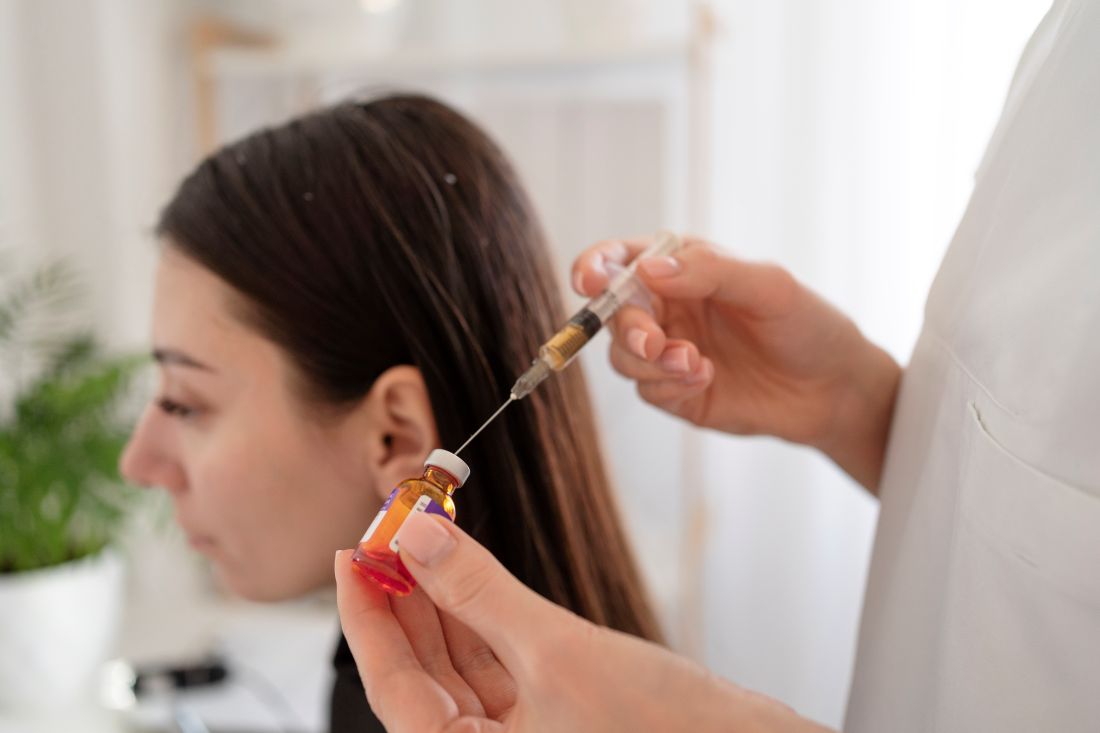
PRP uses your own blood. In this process, growth factors are concentrated and injected into the scalp to stimulate hair follicles.
Who Benefits Most
- Early-stage hair thinning
- People with active hair fall but viable follicles
- Those looking to strengthen existing hair
Maintenance
- Initial sessions: Monthly (3–6 sittings)
- Maintenance: Every 4–6 months
Scope & Limitations of PRP Therapy
- PRP works by stimulating existing hair follicles—it cannot generate new follicles in completely bald areas
- In more advanced stages of hair loss, PRP alone is usually not sufficient, and other treatments may be needed
- Results can vary significantly from person to person, depending on factors like stage of hair loss, biology, and consistency of treatment
c) Medications (Minoxidil, Finasteride)
How They Work
- Minoxidil: Improves blood flow to follicles and prolongs the growth phase
- Finasteride: Reduces DHT (hormone responsible for pattern hair loss)
Who Should Consider Them
- Early to moderate hair loss
- Individuals not ready for procedures
- Patients maintaining post-transplant results
Long-Term Commitment
- Must be used continuously
- Stopping leads to the reversal of benefits
Side Effects
- Minoxidil: Scalp irritation in some cases
- Finasteride: Rare but possible hormonal side effects
A doctor’s supervision ensures safe and appropriate use.
Hair Transplant vs PRP vs Medications: Direct Comparison
| Factor | Hair Transplant | PRP Therapy | Medications |
| Effectiveness | High (permanent redistribution) | Moderate (improves quality) | Moderate (slows progression) |
| Cost | One-time higher cost | Ongoing session-based cost | Monthly ongoing expense |
| Maintenance | Minimal after growth | Regular sessions required | Continuous use required |
| Downtime | 5–10 days | Minimal | None |
| Best For | Advanced hair loss | Early thinning | Early to moderate hair loss |
What Actually Works?
Here’s the truth most people don’t hear:
No single treatment works in isolation for most patients.
The Real Approach: Treatment Layering
- Medications → Control ongoing hair loss
- PRP → Improve hair quality and thickness
- Hair Transplant → Restore lost density
This combination approach often delivers more natural and sustainable results.
Budget vs Results: What Should You Prioritize?
Many patients focus only on cost initially. But hair restoration is a long-term investment.
- Medications seem affordable monthly—but continue indefinitely
- PRP adds up over multiple sessions
- A transplant has a higher upfront cost—but delivers lasting density
So the better question is:
“What gives me the most value over the next 5–10 years?”
A well-planned treatment often reduces unnecessary spending later.
Best Treatment for Hair Loss — Who Should Choose What?
Early Hair Loss
- Start with medications + PRP
- Focus on slowing progression
Moderate Hair Thinning
- Combine medications + PRP
- Consider a transplant for density correction
Advanced Baldness
- Hair transplant is essential
- Support with medications for long-term maintenance
At Radiant Roots, your trusted cosmetic surgery clinic in Mangalore, the focus is on understanding your hair loss pattern, expectations, and long-term goals.
A hair transplant can be transformative—but it’s important to approach it with clarity, not assumptions.
One of the most overlooked realities is that a transplant does not create new hair. It simply redistributes what you already have.
A Thoughtful Approach to Hair Loss Treatment
The best treatment for hair loss today is not about choosing between PRP, medications, or a hair transplant. It’s about choosing the right combination at the right time.
Trends can mislead. Ads can confuse. But a proper diagnosis brings clarity.
If you’re unsure, the most valuable step is not trying everything— but getting the right assessment first. Consult our experts to learn about your condition.
They serve different purposes. PRP improves existing hair, while a transplant restores lost hair. The choice depends on your stage of hair loss.
Medications can slow hair loss and improve density, but results last only with continuous use.
The transplanted hair is permanent, but existing hair may continue to thin without maintenance.
Yes, and this combination often gives better results than either alone.
When hair loss is moderate to advanced and visible density cannot be restored with non-surgical methods.
They work differently. PRP enhances follicle health, while minoxidil stimulates growth. They are often used together.
The best approach depends on your hair loss stage, lifestyle, and goals. A clinical evaluation helps create a personalized plan.