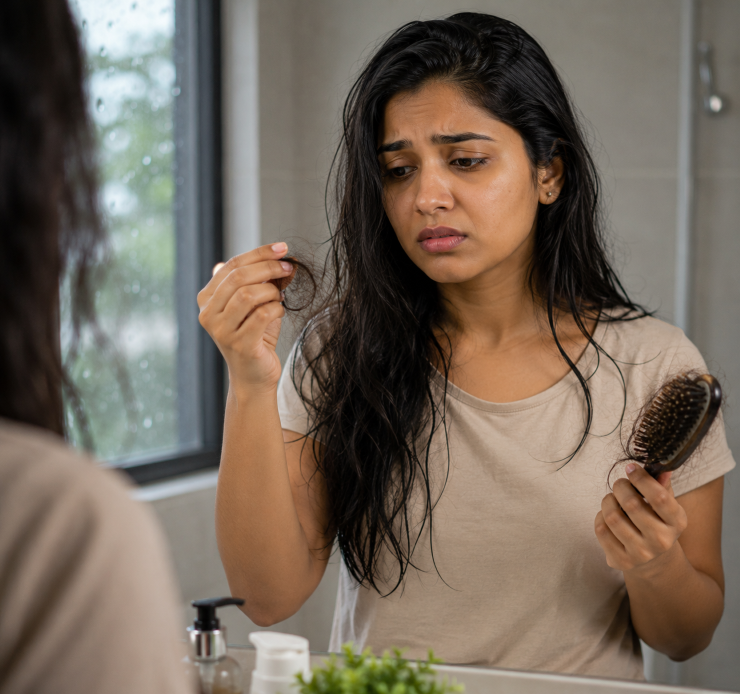
The rain starts, and so does the worry. You run your fingers through your hair and there's more of it in your hand than usual.
The pillow has strands on it. The shower drain needs clearing more often. And the question creeps in - Is this normal, or is something wrong?
If this sounds familiar, you're not imagining things. Monsoon hair fall is real, and it happens to a lot of people every year. But not all hair fall means the same thing, and knowing the difference can save you a lot of unnecessary worry.
This blog walks you through why it happens, how to tell normal shedding from something more serious, and what may help.
Hair Fall Is Not the Same as Hair Loss
These two words often get used as if they mean the same thing, but they don't.
- Hair fall is when strands shed from your scalp, usually as part of a natural cycle
- Hair loss is when hair stops growing back the way it should, leading to visible thinning
Everyone experiences hair fall. Not everyone experiences hair loss. Monsoon mostly affects the first one, and knowing this difference is the first step to not panicking over a few extra strands.
Why Monsoon Makes Hair Fall Worse
Just like how your skin reacts to the weather, your scalp does too. A few things happen during the rainy months:
- Humidity makes the scalp sweat more, which can weaken hair roots over time
- Rainwater carries pollutants that can irritate the scalp
- Damp hair left untied or unwashed for too long encourages fungal growth
- Frequent wetting and drying makes hair strands more brittle
None of this means your hair is falling out for good. It usually means your scalp is reacting to its environment, the same way skin gets oily or dry with the seasons.
Other Everyday Triggers That Add Up
Monsoon rarely acts alone. It often combines with other everyday factors:
- Stress from work, travel, or seasonal illness
- Not drinking enough water during cooler, rainy days
- Skipping meals or eating less balanced food
- Seasonal colds or fevers, which can trigger shedding weeks later
If you've been unwell recently or under more stress than usual, that could be playing a bigger role than the rain itself.
Is This Normal Shedding or Something Else?
It helps to know that losing hair every day is normal. Most people shed anywhere between 50 to 100 strands daily, even outside monsoon. The rainy season can push this number a little higher for a few weeks.
Here's how to know if your hairfall is just seasonal:
- The extra fall settles down once monsoon ends
- Your scalp doesn't feel itchy, sore, or unusually oily
- You don't see visible thinning or bald patches
- New hair growth still feels normal when you check your hairline
If you relate to this, it's likely just your scalp trying to adjust to the weather.
A Few Common Myths, Cleared Up
There's a lot of confusing advice floating around about monsoon hair fall. A few myths worth clearing up:
- "Washing hair more often causes more fall." Not true. Keeping the scalp clean may reduce fungal buildup, which helps.
- "Oiling your hair daily prevents fall." Oiling can support the scalp, but it won't stop weather-related shedding on its own.
- "Cutting hair often makes it grow faster and thicker." Trimming helps with breakage, but it doesn't change how much you shed from the root.
- "Hair fall in monsoon always means baldness later." For most people, it's temporary and has no connection to long-term baldness.
Knowing what's myth and what's fact helps you focus on habits that can make a difference.
Signs You Shouldn't Ignore
Sometimes, what looks like monsoon hair fall is actually something that needs a closer look. Pay attention if you notice:
- Hair fall continuing well after the season changes
- Visible thinning near the crown or hairline
- A scalp that stays itchy, flaky, or tender
- Clumps of hair coming out rather than single strands
- Slower or patchy regrowth over several months
If any of these sound like you, it's worth getting your scalp checked rather than guessing.
A Simple Monsoon Hair Care Routine
Small, consistent habits can help maintain scalp health better than occasional heavy treatments:
- Morning: Detangle gently with a wide-tooth comb before styling
- Post-rain: Rinse hair with clean water if it's been exposed to rainwater directly
- Wash days: Stick to two or three washes a week with a mild, sulphate-free shampoo
- Night: Keep hair loosely tied and fully dry before sleeping
- Weekly: Use a light, non-greasy oil massage may help condition the scalp
- Always: Keep combs and towels clean and dry
These habits won't stop shedding completely, but they reduce the extra strain the monsoon puts on your scalp.
What About Diet and Hair Health?
Hair fall is often a sign of what's happening inside the body, not just outside. During monsoon, appetite and eating patterns can shift, which indirectly affects hair.
A few simple additions can help:
- Protein-rich foods like eggs, lentils, and nuts, since hair is largely made of protein
- Iron-rich foods such as leafy greens, to support healthy growth
- Enough water, even if you feel less thirsty in cooler weather
- Seasonal fruits for vitamins that support scalp health
You don't need a strict diet plan. Just being mindful of these basics during monsoon can support your hair from within.
When a Professional Opinion Makes Sense
If your hair fall feels heavier than usual, lasts longer than a season, or comes with visible thinning, it's reasonable to get it looked at. A typical scalp consultation is simple, they will take a look at your hair pattern, a few questions about your routine and health, and honest guidance on whether it's temporary or needs support. A consultation helps identify the possible cause of hair fall and whether further evaluation or treatment is appropriate.
A Quick Word on PRP for Hair
You may have come across the term PRP while reading about hair fall solutions. In simple words, it uses a small, prepared sample of your own blood to support hair growth at the scalp level. It's not meant for ordinary seasonal shedding, and it's usually considered only after a proper scalp check, for people whose hair fall needs more than routine care.
So, Should You Worry?
Monsoon hair fall is common, and for most people, it settles down on its own once the season passes. But if the shedding feels excessive, doesn't stop, or comes with thinning you can see, consult your treating doctor for an appropriate clinical assessment. A proper consultation can help you understand what your scalp needs and what treatment is right fit for you.
Author:
Dr. Chandra, Board-certified Plastic and Cosmetic Surgeon and the Lead Surgeon at Radiant Roots Hair Transplant & Aesthetic Surgery Centre, Mangalore.
Frequently Asked Questions
1. Is hair fall really worse in monsoon, or does it just feel that way?
It's real. Humidity, rainwater, and dampness all put extra stress on the scalp, which can increase shedding for a few weeks during the season.
2. How much hair fall is considered normal?
Losing around 50 to 100 strands a day is considered normal. Monsoon can push this slightly higher for a short period without it being a cause for concern.
3. Will my hair fall stop once the monsoon ends?
For most people, yes. Seasonal shedding usually settles down naturally once the humidity levels drop.
4. When should I actually worry about hair fall?
If the fall continues beyond the season, you notice visible thinning, or your scalp feels constantly itchy or sore, it's a good idea to get it checked.
5. Can diet affect monsoon hair fall?
Yes. Hair health is closely linked to nutrition, so a balanced diet can support your scalp during a season that's already putting it under some stress.
6. Does using an umbrella or raincoat actually help prevent hair fall?
It helps reduce direct exposure to rainwater, which can carry pollutants that irritate the scalp. It's a small habit, but a useful one during monsoon.
Disclaimer: This content is for general educational purposes only and does not constitute medical advice. Outcomes vary between individuals. Please consult your treating doctor for a personalised assessment before starting any treatment.