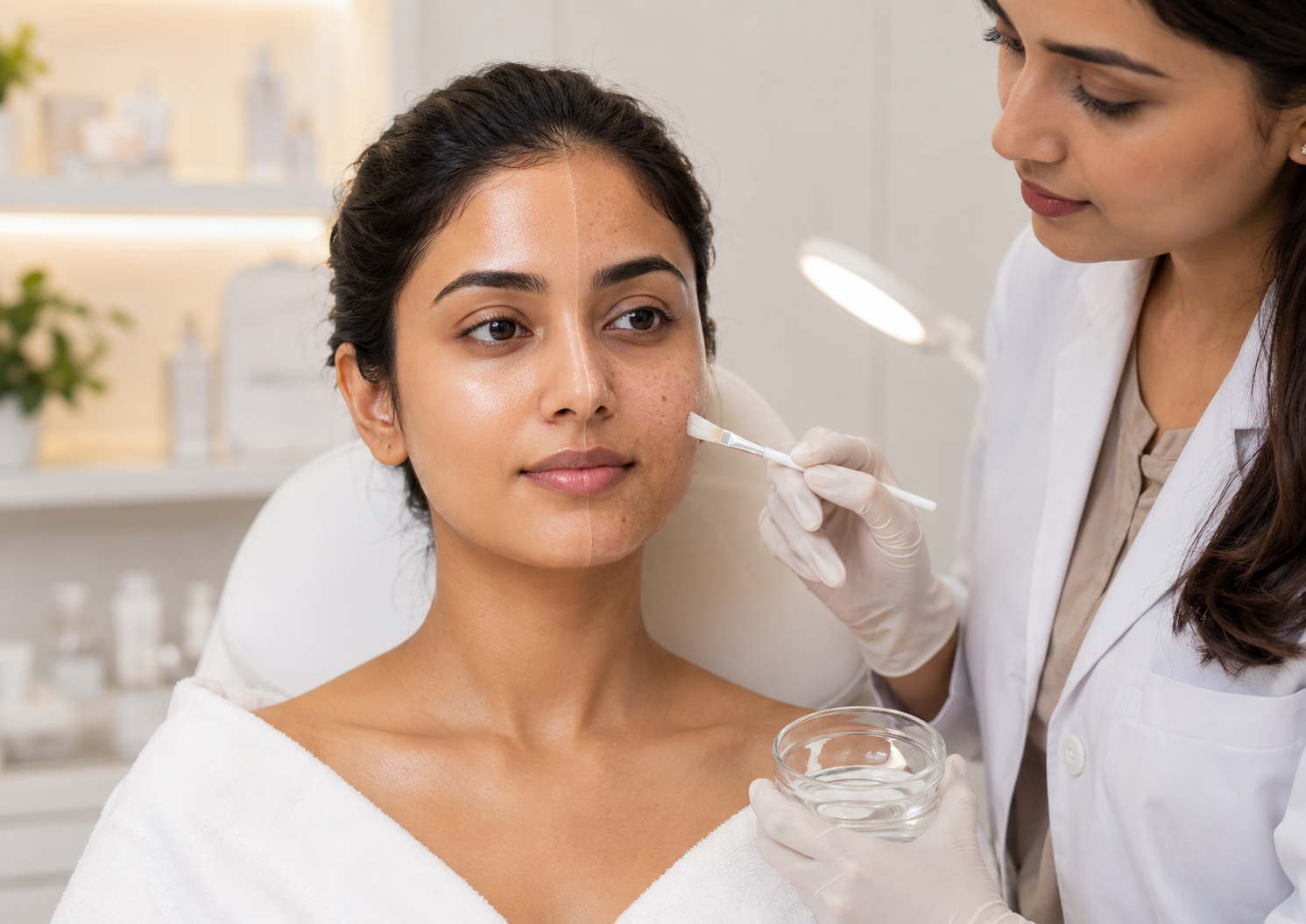
If you've been dealing with uneven skin tone, stubborn dark spots, or acne scars that just won't fade, you've probably tried a lot of things already.
Creams. Facials. Home remedies. Maybe even some expensive serums.
And yet, the skin still doesn't look the way you want it to.
Here's what most people don't realise: many of these concerns go deeper than the surface. Normal products can only reach so far. A chemical peel in Mangalore works at a different level, removing damaged layers of skin and allowing healthier, clearer skin to come through.
What is Chemical Peel And How Does It Work?
A chemical peel is a skin treatment where a solution is applied to the face. This solution gently removes the outer layers of damaged or dull skin.
As those layers peel away, new skin forms underneath, which is smoother, more even in tone, and visibly clearer.
Your skin builds up layers over time. Dead cells, sun damage, old acne marks, and pigmentation all sit on top. A chemical peel clears that buildup and gives fresher skin a chance to show.
There are three levels of peels:
- Superficial peels - mild, work on the very outer layer, no downtime
- Medium peels - go slightly deeper, target pigmentation and acne scars
- Deep peels - address more serious concerns, require more recovery time
Your skin type and concerns determine which one is right for you.
What Is a Laser Treatment and How Is It Different?
Laser treatments use focused light energy to target specific skin concerns. Here the light penetrates the skin at a controlled depth, then it either destroys pigment cells, stimulates collagen, or removes damaged tissue, depending on the type of laser used.
Laser is particularly effective for:
- Stubborn deep pigmentation
- Vascular concerns like redness or broken capillaries
- Tattoo removal
- Laser hair removal
- Acne scars that go deeper into the skin
Unlike a chemical peel, laser treatments are highly targeted. They can be directed at a very specific area or concern with precision.
At Radiant Roots, laser-based treatments are performed, ensuring the right type of laser is matched to your skin tone and concern before anything begins.
What Is a HydraFacial and Where Does It Fit In?
A HydraFacial is a non-invasive treatment that cleanses, exfoliates, extracts, and hydrates the skin, all in one session. It uses a special device that delivers water, serums, and suction simultaneously.
It is a deeply refreshing, relaxing experience. Most people notice an immediate glow after a single session.
HydraFacial is best suited for:
- Skin that needs hydration and a quick refresh
- Clogged pores and surface-level congestion
- Prepping skin before an event
- General skin maintenance and glow
It is not a treatment for established acne scars, deep pigmentation, or significant skin texture issues. It works beautifully as a maintenance treatment and not as a corrective one.
So Which One Is Right for You?
Here's a simple way to know about it:
Choose a chemical peel in Mangalore if:
- You have dark spots, pigmented skin, or uneven skin tone
- Your skin looks dull and tired, even though you have a good skincare routine
- You have surface-level acne scars or post-acne marks
- You want a proven, cost-effective skin treatment with lasting results
- You're consistent and willing to do a course of 3 to 6 sessions
Consider laser treatment if:
- Your pigmentation is deep or hasn't responded to peels
- You're dealing with specific targeted concerns like tattoo removal or hair removal
- You want precise treatment on a localised area
Go for a HydraFacial if:
- Your skin is dry, dull, and needs an immediate hydration boost
- You have a big event coming up and want a quick glow
- You want a relaxing, zero-downtime skin refresh with no peeling
Is a Chemical Peel Safe for Indian Skin Tones?
Indian skin falls in the medium to dark range on the skin tone scale. This means it has more melanin, which makes it slightly more sensitive to certain treatments. If the wrong peel is used, or if it's applied incorrectly, it can temporarily worsen pigmentation rather than improve it.
This is why the choice of peel type, strength, and technique matters enormously.
When performed by an experienced professional at a reputed cosmetic clinic in Mangalore, chemical peels are very safe for Indian skin. The key is a proper skin assessment before the procedure, not a one-size-fits-all approach.
Avoid very deep peels without a thorough consultation. Start with a milder option and build up based on how your skin responds.
Can a Chemical Peel Fix Dull Skin, Dark Spots, and Acne Scars Together?
Yes and this is what makes it one of the most versatile skin treatments available.
A well-chosen chemical peel in Mangalore can address all three concerns in a single course of treatment:
- For dull skin: The peel removes the layer of dead, tired-looking skin sitting on the surface. Immediately underneath is fresher, more radiant skin that reflects light better.
- For dark spots and pigmentation: The peel breaks down excess melanin deposits. With consistent sessions, spots visibly lighten and skin tone evens out significantly.
- For acne scars: Surface-level scars respond well to medium-depth peels. The peel stimulates collagen production, which gradually smooths out texture and reduces the appearance of scarring over time.
The degree of improvement depends on how deep each concern goes. Superficial concerns may resolve in 2 to 3 sessions. Deeper scarring or pigmentation may take 4 to 6.
What Does the Skin Look Like After a Chemical Peel?
This is what most first-timers want to know before they book.
Here's an honest picture of what to expect:
- Day 1-2: Skin may feel tight and slightly sensitive. Some redness is normal.
- Day 3-5: Peeling begins. It may look like dry, flaking skin which is similar to peeling after a sunburn.
- Day 5-7: Peeling slows down. New, smoother skin starts to appear.
- From 2 weeks: Skin looks noticeably clearer and more even.
The degree of peeling depends on the depth of the peel. Superficial peels may show very little visible peeling. Medium peels involve more noticeable shedding.
One important rule: do not pick or pull the peeling skin. Let it shed naturally. Picking can cause scarring and undo the results.
The most important aftercare rule is sun protection every single day. New skin after a peel is sensitive to UV rays. Without SPF, pigmentation can return and undo the results of the treatment entirely.
What Makes a Good Chemical Peel Provider?
Not all clinics offer the same standard of care. Here's what to look for:
- A proper skin assessment before any peel is applied
- A doctor or trained professional performing or supervising the procedure
- Clear explanation of which peel is being used and why
- Honest guidance on aftercare and realistic results
- No pressure to buy unnecessary packages upfront
Cosmetic surgery in Mangalore has grown significantly, which means more options, but also more variation in quality. At Radiant Roots, your skin is assessed individually, not treated as a routine appointment.
The Takeaway
Dull skin, dark spots, and acne scars are three very different problems but a chemical peel can address all three, when the right type is chosen for your skin.
It's not a miracle treatment, and it won't work overnight. But for patients who are consistent and follow proper aftercare, the results are real and lasting.
If you've been trying to improve your skin for a while without seeing the change you want, a consultation at Radiant Roots in Mangalore is a practical next step. You'll leave with a clear understanding of what your skin needs and whether a chemical peel is the right answer for you.
Frequently Asked Questions
1. Is a chemical peel painful?
Most people feel a mild tingling or warmth during the procedure. Superficial peels are generally very comfortable. Medium peels may cause a stronger sensation for a few minutes, but it's manageable and settles quickly once the solution is neutralised.
2. Can a chemical peel remove dark spots permanently?
A chemical peel can significantly lighten dark spots and even out skin tone. However, if the root cause, such as sun exposure or hormonal changes continues, new spots can form. Consistent sun protection after treatment is essential to maintain results long term.
3. How often can I get a chemical peel?
Superficial peels can be done every 3 to 4 weeks. Medium peels are typically spaced 4 to 6 weeks apart to allow the skin to heal fully between sessions. Your doctor at Radiant Roots will recommend the right frequency based on your skin's response.
4. Will a chemical peel make my skin look worse before it gets better?
Temporarily, yes and this is completely normal. The peeling phase, usually between days 3 to 5, can look quite dry and flaky. This is the old, damaged skin shedding. Once it clears, the skin underneath looks noticeably smoother and clearer.
5. Can I wear makeup after a chemical peel?
After a superficial peel, most people can apply light makeup within 24 to 48 hours. After a medium peel, it's better to wait until the peeling phase is complete, usually around day 7. Applying makeup too soon can irritate healing skin and increase the risk of infection.