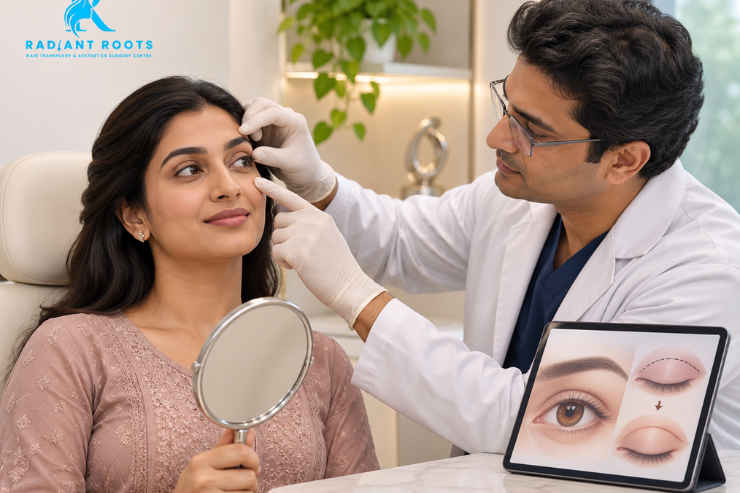
On a tired morning, you may notice it in the mirror: heavy lids that make your eyes look smaller, or puffy bags that add years to your face. Many people consider eyelid surgery for exactly this reason, and almost all of them carry the same quiet worry. Will I still look like myself afterwards?
The reassuring answer is that a well-planned procedure refreshes the eyelids without redrawing the eye. Searches for eyelid surgery in Mangalore and other Indian cities have grown steadily, and this question comes up in nearly every consultation.
What Determines Your Natural Eye Shape
Before looking at what surgery can change, it helps to know what gives each eye its shape in the first place.
Bone Structure and Eye Socket
The bony socket that holds your eye sets its basic outline, depth and position. Surgery on the eyelids does not alter this.
Canthal Tilt
This is the angle between the inner and outer corners of your eye. It gives eyes an upward, level or downward slant, and it is largely inherited.
Iris and Eyeball Size
The size of your eyeball and the visible part of the iris are fixed. They do not change with eyelid surgery.
Skin, Fat and Muscle of the Eyelid
This is the only layer that eyelid surgery works on. Excess skin, bulging fat and a weak lifting muscle can hide the natural eye, and correcting them lets it show.
How Eyelid Surgery Can Change the Look of Your Eyes
The type of procedure decides how much visible change you can expect. Here are the common ones.
Upper Eyelid Surgery (Upper Blepharoplasty)
Extra skin and fat are removed from the upper lid. The eyes look more open and rested, and the lid crease often becomes clearer.
Lower Eyelid Surgery (Lower Blepharoplasty)
This addresses under-eye bags and loose skin. It smooths the area below the eye without changing the eye itself.
Double Eyelid Surgery
For people with a low or missing lid crease, a new crease can be created. This changes the look more noticeably than other procedures, so careful planning of crease height matters.
Ptosis Correction
When the lifting muscle is weak, the upper lid droops and may cover part of the pupil. Tightening the muscle improves vision as well as appearance.
Canthoplasty and Canthopexy
These procedures support or reposition the outer corner of the eye. They are the only options that can alter eye tilt, and they are done for specific needs, not in routine cases.
What Stays the Same After Surgery
Most of what makes your eyes yours remains untouched. Knowing this can ease a lot of anxiety.
- Eye colour and iris size
- The distance between your two eyes
- Your natural tilt, unless a corner procedure is planned
- Your brow position, unless a brow lift is done separately
- Your overall expression and facial character
In simple terms, the aim is a refreshed version of your own eyes, not a different pair.
Why Some Results Look Unnatural
When people say eyelid surgery changed their eyes too much, the cause is usually one of a few avoidable issues.
- Too much skin removed: This can make the eyes look wide, tight or surprised, and may leave them unable to close fully.
- A crease set too high: It can look artificial, especially on eyes that naturally have a low crease.
- Lower lid pulling down: Excess tightening can expose the white of the eye below the iris.
- Asymmetry: Slight differences are normal, but a clear mismatch may need correction.
How Good Planning Prevents This
A careful surgeon studies your face before operating. This includes measuring lid height, checking skin quality, comparing both eyes and taking photographs. A conservative approach, removing a little less rather than too much, protects the natural shape.
Who Is a Good Candidate for Eyelid Surgery
Not everyone needs surgery, and not everyone is ready for it. A few points help decide.
- Adults with heavy upper lids, hooding or under-eye bags
- Those with drooping lids that affect vision or make eyes feel tired
- Good general health, with conditions such as diabetes, high blood pressure and thyroid problems under control
- Realistic expectations about what surgery can and cannot do
Why an Eye Check Comes First
Dry eyes, thyroid eye changes and certain eye diseases can affect healing. A basic eye examination before surgery helps avoid complications.
Recovery: What to Expect
Healing is gradual, and early swelling can make results look different from the final outcome. Patience matters here.
- First 2 to 3 days: Swelling, mild bruising and tightness are common. Cold compresses help.
- Around 1 week: Stitches are usually removed. Most people can return to light work.
- 2 weeks: Bruising fades. Makeup and contact lenses can usually be restarted when the surgeon allows.
- 1 to 3 months: Residual swelling settles and the crease softens.
- Up to 6 months: Scars fade and the final shape becomes clear.
Simple Care Tips
Keep your head raised while sleeping, avoid rubbing your eyes, wear sunglasses outdoors and skip heavy exercise until cleared. Use only the eye drops and ointments prescribed.
Cost and Choosing the Right Surgeon
Cost is one of the most searched concerns, and it is natural to want clarity before deciding.
What Affects the Cost
The cost of eyelid surgery in Mangalore, as in any other city, depends on the procedure type, whether upper, lower or both lids are treated, the type of anaesthesia, hospital facilities and follow-up care. Ptosis and double eyelid procedures are generally more detailed than a simple upper lid procedure.
What to Look For in a Surgeon
- A qualified plastic surgeon with recognised postgraduate training in plastic surgery
- Clear explanation of the procedure, risks and limits
- No guarantees of a specific look
- A proper facility with safety and emergency arrangements
- Willingness to discuss alternatives, including non-surgical options
Final Thoughts
Eyelid surgery does not replace your natural eye shape. It removes what hides it. When the plan respects your bone structure, tilt and proportions, the result is eyes that look like yours on a well-rested day.
If heavy lids or under-eye bags have been affecting your comfort or confidence, a calm, unhurried consultation with a qualified plastic surgeon is a good first step. Asking questions about eyelid surgery in Mangalore or any city you choose, and understanding what is realistic for your face, helps you decide with confidence.
Author:
Dr. Chandra
Board-certified Plastic and Cosmetic Surgeon (MCh)
The Lead Surgeon at Radiant Roots Hair Transplant & Aesthetic Surgery Centre, Mangalore.
Frequently Asked Questions
These are the questions people most often ask before deciding on eyelid surgery.
1. Can eyelid surgery make my eyes look bigger?
It can make them look more open, because removing hooded skin reveals more of the eye. The actual size of your eyeball does not change.
2. Is eyelid surgery painful?
The procedure is done under local or general anaesthesia, so you feel little during it. Afterwards, most people feel tightness or mild discomfort that is easily managed with prescribed medicines.
3. Will I have visible scars?
Incisions are placed in the natural lid crease or just below the lash line, so scars usually blend in well. They fade over a few months.
4. How long do the results last?
Upper lid results often last 5 to 10 years or longer, and sometimes for life. Ageing continues naturally, so the eyes will still change with time.
5. When can I go back to work and wear makeup?
Most people return to desk work in 7 to 10 days. Eye makeup is usually allowed after about 2 weeks, once the surgeon confirms healing is complete.
This content is for general educational purposes only and is not a substitute for professional medical advice, diagnosis or treatment. Results and recovery vary from person to person. Please consult a qualified plastic surgeon for guidance specific to your condition.