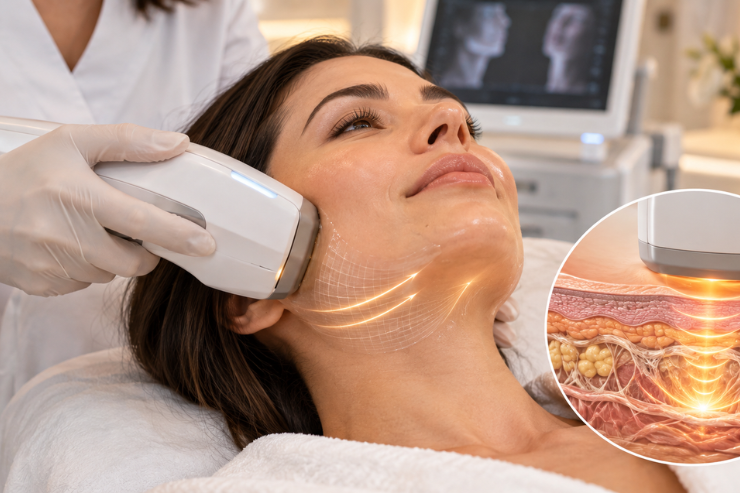
That soft shadow under the chin can show up in every photo, no matter how you angle your face? Wondering if it's from weight, loose skin, or both, and what can make your face picture-ready again? This guide covers which type of double chin responds to HIFU treatment, how it works, what to expect from sessions and results, so you have what you need to decide what feels right for you.
Which Type of Double Chin Do You Have?
Not every double chin is the same, and knowing the difference matters before looking at any treatment.
| Type | How It Feels |
| Fat-based | Soft, pinchable, doesn't change much when the head tilts back |
| Skin laxity-based | Skin looks loose or crepey, especially when the head tilts up |
| Mixed | A combination of both |
A simple way to check: gently tilt your head back and look in the mirror. If the fullness stays soft and even, it's likely fat. If the skin visibly sags or folds, laxity may be playing a bigger role. This distinction is the starting point for understanding whether HIFU treatment fits your specific concern.
How HIFU Treatment Works on the Chin
HIFU stands for High-Intensity Focused Ultrasound. During the session, ultrasound energy is directed to a specific depth beneath the skin's surface, the same depth addressed during a traditional facelift, but without any cuts.
- The device delivers energy in small, focused points under the skin
- This creates a controlled reaction that prompts the skin to build new collagen
- The surface of the skin stays undamaged, since the energy targets deeper layers only
- Collagen renewal is gradual, which is why tightening builds over weeks rather than appearing instantly
Most sessions are completed within 30 to 60 minutes, depending on the area covered. A mild warming or prickling sensation is common as the energy is delivered, and some clinics offer numbing cream for comfort.
Who Can Consider This Treatment?
HIFU treatment is generally considered for:
- Mild to moderate skin laxity under the chin
- Early signs of sagging rather than significant fat build-up
- Adults looking for a non-surgical option before considering surgery
It may not be suitable for everyone, such as those with active skin infections, certain skin conditions, or pregnancy are usually reasons to postpone treatment. A proper assessment is needed to confirm if this is the right fit, since skin thickness and facial structure both play a role.
HIFU Treatment vs Other Double Chin Options
| Option | What It Targets |
| HIFU Treatment | Skin laxity, tightening through collagen stimulation |
| Liposuction | Excess fat removal, surgical |
| Injectable fat-dissolving treatments | Localised fat reduction, non-surgical |
The right option depends on what's causing your double chin. Some people are advised to combine approaches, while others need just one; a doctor can help match the treatment to the actual concern rather than guessing.
How Many HIFU Sessions Are Required?
There's no fixed number that applies to everyone; this depends on skin laxity, treatment area, and how your skin responds.
- A single session is often enough as a starting point for mild to moderate laxity, since the collagen-building process continues to work for months after
- Touch-up sessions, usually spaced 12 to 18 months apart, are sometimes considered as skin continues to age naturally
- Mixed-cause cases may need a combination approach, which can change the number and spacing of sessions
Your doctor decides the right plan only after assessing your skin directly; this isn't something that can be predicted from a chart alone.
What Results Look Like Over Time
Results don't appear overnight, since the process relies on the skin's own collagen renewal.
- Early changes may be noticed within a few weeks
- Visible tightening typically builds up to 2 to 3 months after the session
- The full effect can continue developing for up to 3 to 6 months
Change tends to be gradual and progressive rather than sudden. Individual results and timelines vary from person to person.
Expected Side Effects After The Treatment
Mild reactions are a normal part of the process and usually settle on their own:
- Temporary redness, swelling, or tenderness often eases within a day or two
- Occasional mild numbness or light bruising
- Rarely, temporary sensitivity in the treated area
If any reaction feels unusual or lasts longer than expected, it's best to reach out to your treating doctor promptly.
Aftercare: What to Do Post-Treatment
Since HIFU treatment is non-surgical, aftercare is fairly simple, but a few steps help the skin settle comfortably:
- Avoid direct sun exposure for a few days and use sunscreen
- Skip harsh scrubs, saunas, or steam facials for about a week
- Keep the area moisturised, as mild dryness can occur
- Stick to your regular skincare routine unless your doctor advises otherwise
- Report any swelling or discomfort that doesn't settle within a few days
Most people return to daily activities the same day, since there's no incision or wound to manage.
How Much Does HIFU Treatment Cost in India?
Cost isn't fixed and depends on a few factors:
- Area being treated (chin alone vs. full face)
- Number of sessions recommended
- Device and technology used by the clinic
- Consultation and assessment fees, where applicable
As a general indicative range, smaller areas like the chin typically fall between ₹15,000 and ₹40,000 per session in India, with full-face treatments costing more. Your doctor can give you an accurate estimate after a proper assessment.
Understanding Your Options Before Choosing
A double chin isn't always about one single cause, and knowing which type you're dealing with is the real starting point. For skin laxity, HIFU treatment is commonly used to tighten loose skin under the chin. For fat-based fullness, it's not the primary tool, since it works on tightening rather than fat reduction and for mixed cases, it may be paired with another approach based on individual assessment. A personalised assessment with a qualified doctor is the clearest way to know what suits your skin. Individual results may vary.
Author:
Dr. Chandra
- Board-certified Plastic and Cosmetic Surgeon (MCh)
- The Lead Surgeon at Radiant Roots Hair Transplant & Aesthetic Surgery Centre, Mangalore.
Frequently Asked Questions
Q1. Is HIFU treatment painful for the chin area?
Most people feel mild warmth or tingling during the session rather than sharp pain. Some clinics offer numbing options beforehand if needed for added comfort throughout.
Q2. How many sessions are needed to see a difference?
Many people start with one session and notice gradual tightening over a few months. Some choose a follow-up later, depending on how their skin responds over time.
Q3. Is HIFU treatment permanent, or does it need repeating?
Results build over months but aren't permanent, since skin continues to age naturally afterward. A touch-up session is sometimes considered after a year or so.
Q4. Can HIFU be combined with other double chin treatments?
Yes, in mixed cases it may be paired with a fat-reduction approach. This is decided individually after a proper skin and facial assessment beforehand.
Q5. Is HIFU treatment safe for all skin types?
It's generally considered safe across skin types, though settings are adjusted individually each time. A proper consultation helps confirm suitability for your specific skin type.
Disclaimer: This content is for general educational purposes only and does not constitute medical advice. Individual results may vary. Please consult your treating doctor for a personalised assessment before starting any treatment.