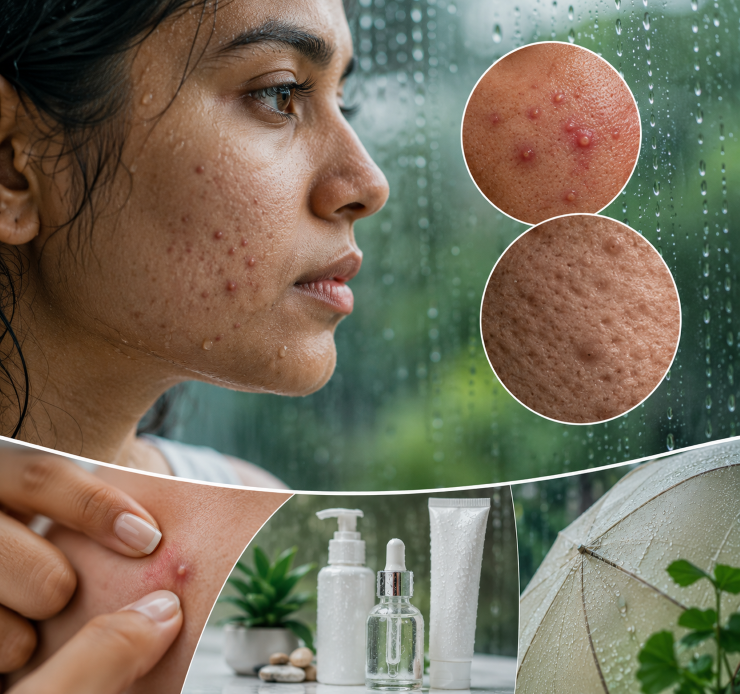
A new breakout during monsoon is frustrating enough. But what worries most patients is what happens after; the mark that stays behind long after the pimple is gone.
Some marks fade in a few weeks. Others settle in and change the skin's texture for good. Left untreated, deeper marks can also affect confidence and make patients more likely to pick at their skin, which only adds to the damage.
Understanding why some breakouts scar and others don't can help you respond the right way, before a temporary mark turns into something permanent.
Pigmentation vs Scar: What's the Difference
Not every mark left behind is a permanent scar. There are two different things happening on the skin:
| Feature | Pigmentation | True Scar |
| What it is | A flat colour change (dark or red) | A change in skin texture - a dip or raised area |
| Cause | Inflammation from a healed breakout | Damage to deeper skin tissue |
| Fades on its own? | Often, over weeks to months | Rarely fades completely without treatment |
| Sun sensitivity | Gets darker with sun exposure | Less affected by sun, but sun can still irritate it |
Pigmentation usually settles down with time, gentle care, and daily sunscreen. A true scar, especially an indented or raised one, generally needs a proper evaluation, since it involves the deeper structure of the skin rather than just its surface colour.
Why Picked or Infected Bumps Scar More
A bump is far more likely to leave a lasting scar when it's:
- Picked, popped, or scratched before it heals naturally
- Left inflamed or infected for an extended period
- Deep under the skin rather than surface-level
- Treated with harsh, unsuitable products that irritate it further
In general, the longer a breakout stays inflamed without proper care, the greater the chance of visible scarring once it heals. This is one of the main reasons breakouts are best left alone rather than managed at home with pressure or scratching.
Home Remedies That Can Make Marks Worse
A lot of common monsoon skin advice does more harm than good:
- Toothpaste often irritates already-inflamed skin and can worsen redness
- Lemon juice is highly acidic and can make pigmentation darker with sun exposure rather than lighter
- Baking soda disrupts the skin's natural pH and weakens its protective barrier
- Over-scrubbing, physically damages healing skin, which can increase the chance of scarring
It's usually safer to let a breakout heal undisturbed and stick to gentle, dermatologist-suitable products rather than experimenting with home fixes.
How Sweat and Clogged Pores Cause Marks
Monsoon humidity changes how skin behaves in a few specific ways:
- Sweat doesn't evaporate as easily, so it sits on the skin longer
- Pores stay clogged with sweat, oil, and dirt for longer stretches
- Bacteria multiply faster in warm, damp conditions
- Skin that's already prone to breakouts reacts more often and more intensely
This combination means monsoon breakouts tend to be more frequent and, if not cared for properly, more likely to leave a mark behind compared to other seasons.
Do Old Scars Look Worse in Monsoon Too?
It's not just new marks that draw attention this season. Existing acne scars often seem more noticeable during monsoon, though the reason isn't the weather changing the scar itself:
- Nearby breakouts and inflammation can make the surrounding skin look uneven, drawing more attention to older marks
- A weakened skin barrier can make overall skin tone look duller or patchier
- Increased oiliness can make textured areas, like rolling or boxcar scars, catch more light and appear more visible
The scar itself usually isn't changing structurally, it's the skin around it reacting to the season that makes it stand out more.
Simple Habits to Prevent Monsoon Marks
A few habits can lower the chances of a mark forming in the first place:
- Cleanse gently, twice a day, without over-scrubbing
- Use a light, non-comedogenic moisturiser instead of heavy creams
- Apply sunscreen daily, even on cloudy or rainy days
- Avoid touching, picking, or popping any bump
- Change out of sweaty or damp clothing as soon as possible
These habits won't prevent every breakout, but they do reduce the chances of a temporary mark becoming permanent.
When a Mark Needs Professional Evaluation
Most marks fade with time and basic care, but it's worth getting a proper opinion if:
- A mark hasn't faded after a few months
- The area feels textured, dipped, or raised to the touch
- New marks keep appearing in the same spots repeatedly
- Over-the-counter products aren't making any visible difference
A dermatologist or cosmetic surgeon can confirm whether it's pigmentation that will settle on its own, or a scar that needs a dedicated treatment plan.
Can Acne Scars Be Removed Permanently?
This is one of the most common questions asked about acne scarring, and the honest answer is that it depends on the scar type and how the skin responds. A few points worth knowing:
- Certain treatments, such as microneedling, laser resurfacing, and chemical peels, can noticeably improve how a scar looks and feels
- No treatment can promise complete, permanent removal for every scar type, since results vary from person to person
- Deeper or older scars usually need a combination of approaches over multiple sessions rather than a single fix
- Acne scar treatment in Mangalore, like anywhere else, works best when it's based on an individual assessment rather than a one-size-fits-all plan
A cosmetic surgery clinic in Mangalore offering these treatments can guide which combination suits your specific scar type, skin tone, and healing pattern.
What a Normal Healing Timeline Looks Like
One of the most common questions patients ask is simply, how long should I wait before I worry? A rough timeline can help:
| Time Since Breakout | What's Normal |
| 1 to 4 weeks | Redness or dark spot is expected; this is early healing |
| 1 to 3 months | Pigmentation should be visibly fading |
| 3 to 6 months | Most flat marks fade close to fully by this point |
| Beyond 6 months | If the mark hasn't changed, it's worth getting evaluated |
This is a general guide, and healing time can vary from person to person based on skin type and how the breakout was managed. If a mark feels raised, pitted, or unchanged well past this window, that's the point to stop waiting and get it looked at rather than continuing home care.
Spot It Early, Treat It Right
New breakouts during monsoon are common, but what happens next is often more important than the breakout itself. Marks that are left alone, kept clean, and protected from sun tend to fade with time. Marks that are picked or infected are more likely to stay.
If a mark is lingering longer than expected and you're unsure which one you're dealing with, it's worth speaking with a qualified doctor for a personalised assessment rather than guessing.
Author:
Dr. Chandra
- Board-certified Plastic and Cosmetic Surgeon (MCh)
- The Lead Surgeon at Radiant Roots Hair Transplant & Aesthetic Surgery Centre, Mangalore.
Frequently Asked Questions
Q1. Is post-acne pigmentation the same as a scar? No. Pigmentation is a temporary colour change from inflammation. A true scar involves a change in skin texture, like a dip or raised area, and doesn't usually fade the same way.
Q2. How long does it take for acne marks to fade naturally? Pigmentation often fades over a few weeks to several months with proper skincare and sun protection. True scars generally don't fade fully without professional treatment.
Q3. Does sunscreen help reduce acne scars? Yes, indirectly. Sunscreen prevents pigmentation from darkening further and protects healing skin, which supports a more even tone over time.
Q4. Can popping a pimple always cause a scar? Not always, but it raises the risk significantly. Popping can push infection deeper into the skin and disrupt healing, making a scar more likely.
Q5. Is it normal to get more marks during the monsoon? Yes, humidity and clogged pores make breakouts more frequent this season. This doesn't mean every mark will scar, but care matters more during these months.
Disclaimer: This content is for general educational purposes only and does not constitute medical advice. Outcomes vary between individuals. Please consult your treating doctor for a personalised assessment before starting any treatment.