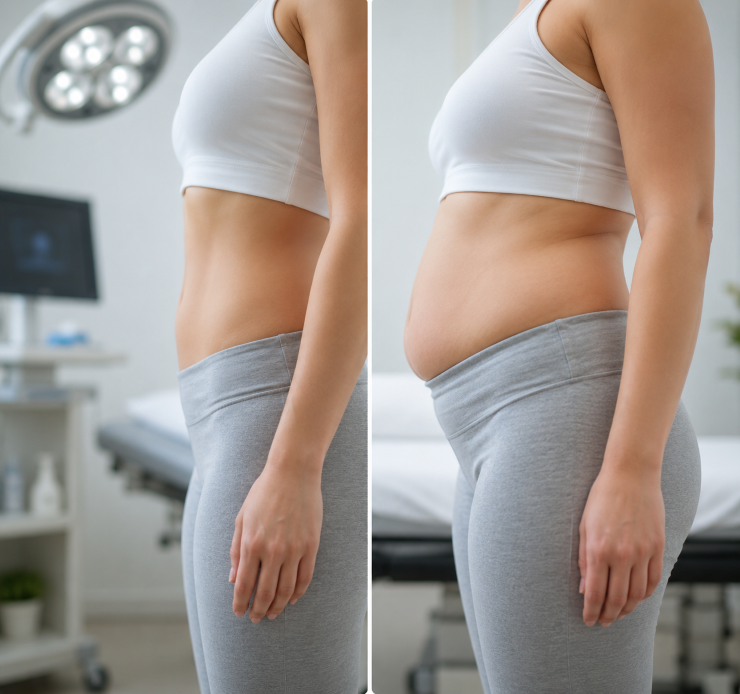
Common questions that patients usually worry about after their liposuction surgery are “What if the weight comes back?” or “What if all this effort and healing gets undone by a few extra kilos next year?”
It's a fair concern, and like any surgical procedure, liposuction does come with a recovery period involving swelling and temporary changes before results settle. Understanding what actually happens to fat cells after the procedure can put a lot of that worry to rest.
Why This Worry Comes Up So Often
This concern isn't unusual, it's one of the most common questions patients ask before and after the procedure.
- Liposuction is sometimes mistaken for a permanent weight-loss solution rather than a body contouring procedure.
- Patients often haven't been told how fat cells actually behave after removal.
- Online myths about "fat relocating" add to the confusion.
A clear understanding of biology usually resolves most of this worry. Knowing the facts helps set expectations that are realistic, not just reassuring on the surface.
What Really Happens to Removed Fat Cells
Liposuction works differently from weight loss, and this difference matters here.
- Fat cells removed during liposuction are gone permanently.
- The body doesn't regenerate new fat cells in that exact spot under normal circumstances.
- A portion of fat cells is always left behind to preserve natural tissue structure.
- If weight is gained later, it's these remaining cells that expand, not new ones forming.
This is the core reason liposuction results can hold up well over time, provided weight stays reasonably stable.
Why Treated Areas React Differently Later
Weight gain doesn't affect treated and untreated areas the same way.
| Treated Area | Untreated Area | |
| Fat cell count | Reduced permanently | Unchanged |
| Response to weight gain | Cells enlarge at the same rate, but fewer of them means less visible change | Existing cells enlarge, same as before |
| Visual change | Often more subtle | Can be more noticeable |
Because treated areas have fewer fat cells to begin with, they tend to show less visible change even if some weight is regained.
Busting the "Fat Has to Go Somewhere" Myth
A common worry is that fat removed from one area will simply reappear somewhere else. Research from the American Society of Plastic Surgeons looked into this directly.
- Studies following liposuction patients over several months found no evidence of fat cells actively migrating to treated areas.
- Fat doesn't "travel" or redistribute itself as a reaction to surgery.
- If a person eats in a caloric surplus and gains weight, that new weight is stored in cells that already exist elsewhere in the body; commonly in areas like the arms, back, or neck.
- This is simply because untreated areas still have their normal number of fat cells available to store it.
This is genuinely reassuring information, though individual responses can still vary from person to person.
Cells Get Bigger, Not More Numerous
There's a simple biological reason behind all of this.
- In most cases, the body doesn't create significant new fat cells in adulthood, this typically only changes with substantial weight gain.
- Existing fat cells can only grow larger or smaller, based on energy intake and activity.
- Liposuction reduces the total number of fat cells in a treated area.
- Fewer cells means less room for that area to expand later, even with some weight gain.
This is the biological reason treated areas tend to hold their shape better than untreated ones over time.
How Much Weight Gain Actually Matters
Not all weight gain affects results the same way.
| Weight Change | Typical Effect |
| A few kilos | Minimal visible change; treated area still looks improved |
| Moderate gain | Some softening of contour; still generally holds shape better than untreated areas |
| Significant gain (10%+ of body weight) | Can lead to new fat cell formation throughout the body, treated areas included |
This is simply how the body responds to changes in energy balance, not a flaw in the procedure itself.
How Lifestyle Shapes the Long-Term Picture
A few everyday habits make a real difference here.
- Staying close to your post-procedure weight helps preserve contour.
- A balanced routine supports how treated areas hold their shape.
- Occasional fluctuation is normal and rarely undoes results significantly.
- Long-term stability matters more than short-term perfection.
- Sleep, stress, and overall health also play a quiet role in how the body maintains weight over time.
This isn't about pressure to maintain a certain number, it's simply useful context for what to expect, and it's a conversation worth having with your treating doctor rather than guessing on your own.
Visceral Fat: A Health Angle Worth Knowing
There's a difference between fat under the skin and fat stored around internal organs, and it's worth understanding both.
- Subcutaneous fat sits just under the skin and this is what liposuction targets.
- Visceral fat sits deeper, around internal organs, and isn't something liposuction addresses.
- Research suggests that gaining weight after liposuction with little activity can lead some of that new fat to be stored internally as visceral fat instead.
- Regular movement appears to help prevent this internal fat build-up.
This is less about aesthetics and more about overall health.
A Quick Note for Mangalore's Climate
Coastal humidity plays a small but real role during recovery.
- Staying well hydrated supports skin and healing in humid weather.
- Breathable fabric under compression garments adds comfort during recovery.
- Sweat and moisture management matters more here than in drier regions.
What This Means for You
Gaining a little weight after liposuction in Mangalore doesn't erase the procedure's results the way many patients fear. Fat cells removed from treated areas stay removed, and research suggests fat doesn't simply relocate elsewhere in the body.
What does matter is how stable your weight stays over time, and that's something well within your control. If you'd like to understand how this applies to your specific case, a liposuction consultation in Mangalore with your treating doctor is the best way to get clarity suited to your body.
Author:
Dr. Chandra
- Board-certified Plastic and Cosmetic Surgeon (MCh)
- The Lead Surgeon at Radiant Roots Hair Transplant & Aesthetic Surgery Centre, Mangalore.
Frequently Asked Questions
Q1. Does liposuction affect my ability to gain or lose weight in the future?
No. Liposuction removes fat cells from specific areas but doesn't change how your body manages weight overall. Diet, activity, and metabolism still apply as before.
Q2. How long does it take to see final results after liposuction surgery in Mangalore?
Swelling typically reduces over several weeks, with final contour often visible around 3 to 6 months, depending on the individual and treated area.
Q3. Is liposuction considered safe for maintaining long-term results?
Yes, when performed by a qualified surgeon with appropriate safety protocols. Long-term results depend on both the procedure and post-procedure lifestyle choices.
Q4. Can exercise help maintain liposuction results better?
While not mandatory for the treated area itself, regular activity is generally recommended to support overall metabolic health and reduce the chance of new weight being stored internally as visceral fat.
Q5. Will treated areas ever look exactly like they did right after the procedure?
Some natural variation is normal over months and years, similar to how any part of the body changes gradually. Individual results may vary based on lifestyle and body type.
Disclaimer: This content is for general educational purposes only and does not constitute medical advice. Individual results may vary. Please consult your treating doctor for a personalised assessment before starting any treatment.